
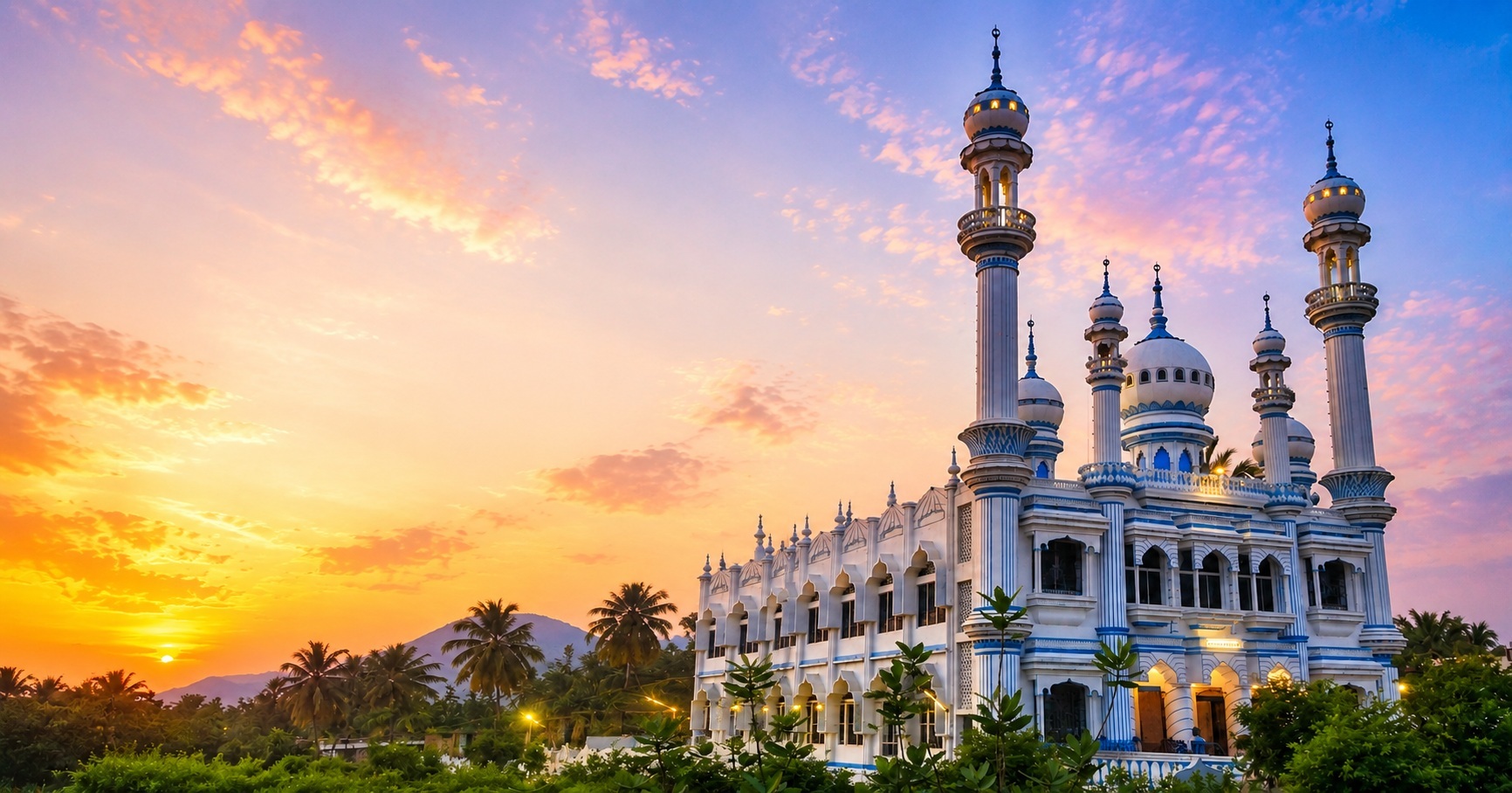
Before the village fully awakens, there is already a quiet movement towards the mosque. The first footsteps arrive gently in the early morning air. Familiar faces begin to appear - elders who have followed the same path for many years, young people beginning their day with prayer, and children walking alongside their families, learning traditions through observation.
In the heart of Thittuvillai, the Jumma Mosque has been a place where generations have gathered in prayer, remembrance, and community life. Beyond its walls and structure, the mosque carries the memories of countless people who have entered through its doors with faith in their hearts and affection for the place they call their own.
The same doorway has welcomed grandparents, parents, and children. Each generation has added its own moments of prayer, service, learning, and togetherness, creating a continuing story that connects the past with the present.
A Living Tradition of Faith
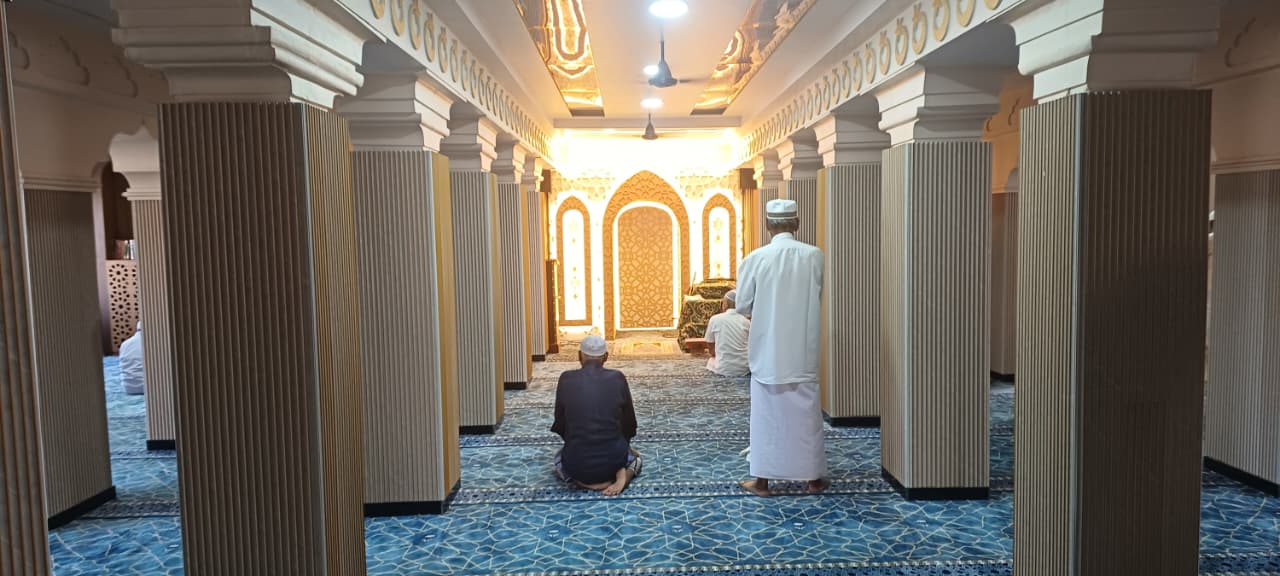
From the earliest hours, people of every generation begin to arrive. Elders whose connection with the mosque has grown through a lifetime of devotion continue to arrive with dedication and sincerity. Some walk slowly with the support of a walking stick, some arrive with their families, and some carry the quiet strength that comes from years of commitment.
Young worshippers and children also become part of this beautiful gathering. They learn by watching those who came before them - the importance of arriving on time, respecting the place of worship, greeting others warmly, and maintaining the manners that have been passed down through generations.
Many worshippers naturally seek the first rows during congregational prayer. Standing together in those rows, people from different ages and backgrounds become part of the same gathering before Allah. The elder, the young person, and the child each share the same space of devotion and remembrance.
The Culture of Cleanliness and Respect
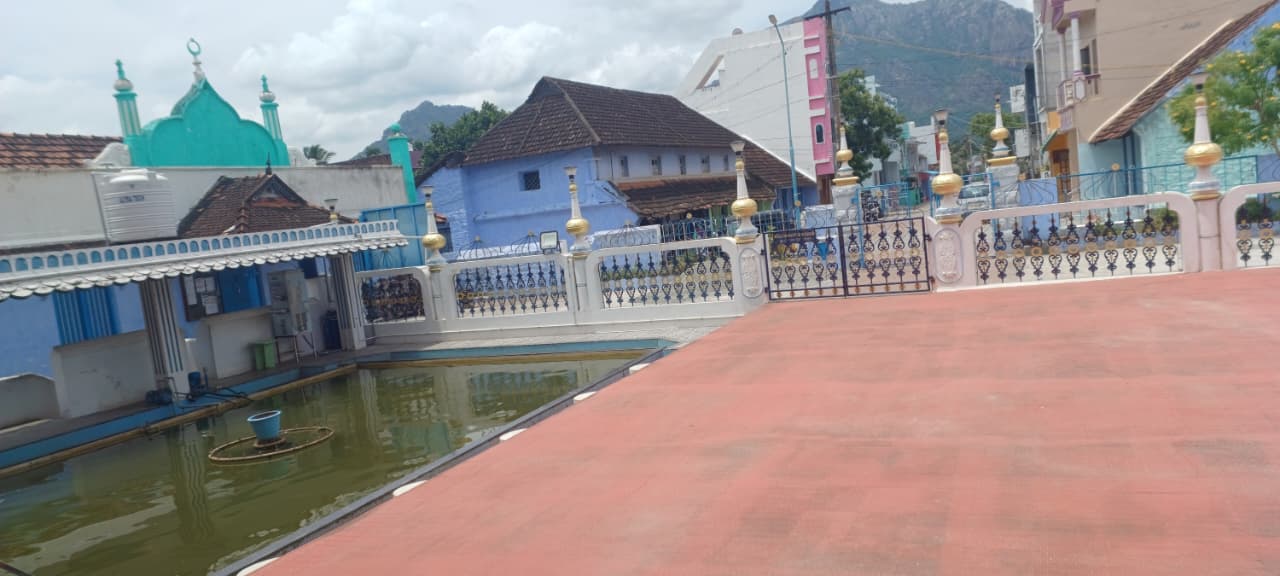
Before entering the mosque, worshippers follow the familiar practice of washing their feet and preparing themselves before stepping into the mosque surroundings.
From small children accompanying their parents to elders who have followed this tradition throughout their lives, everyone participates in this custom with care and respect.
This tradition reflects the honour people carry for the place of worship. The courtyard, the ablution area, and the prayer spaces are approached with cleanliness, humility, and mindfulness.
Children learn these customs naturally. They observe their parents and elders, and slowly these practices become part of their own connection with the mosque.
A Community Bound by Greetings and Care
The greeting of peace, “Assalamu Alaikum,” passes naturally from one person to another. Sometimes an elder begins the greeting, welcoming the younger generation with warmth and affection. Sometimes the younger person approaches first, showing respect to those who came before them.
These greetings create an atmosphere of friendship, dignity, and mutual respect.
People enquire about one another.
“How is your health?”
“How is your family?”
“How are the children?”
These simple conversations carry genuine care and affection. They keep alive the closeness and warmth that have always been part of the community. A person who has been away is remembered. Someone facing difficulty receives encouragement. Moments of happiness become shared occasions of joy.
Through these everyday interactions, the mosque remains closely connected with the lives of the people around it.
Moments of Worship and Remembrance
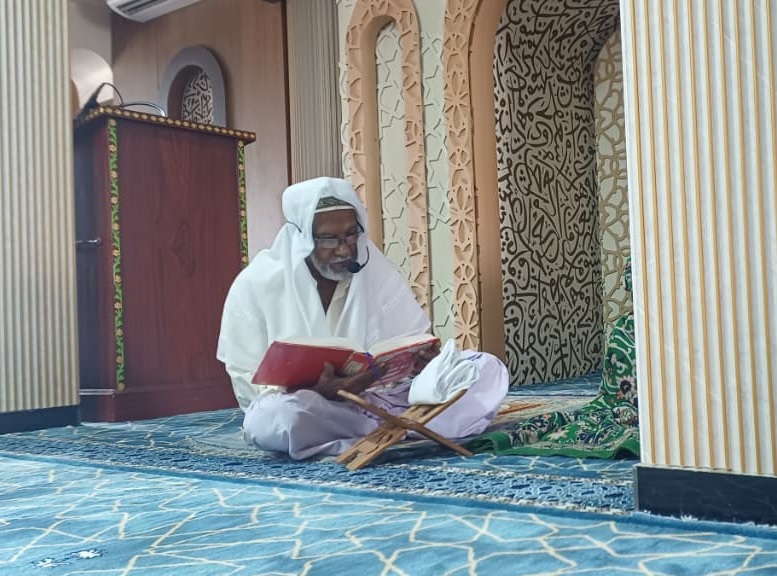
Throughout the day, different forms of devotion continue within the mosque.
Some sit quietly with prayer beads in their hands, engaged in dhikr and remembrance of Allah. Some spend time reading the Qur’an, reflecting upon its verses and teachings. Some offer Nafl prayers in moments of personal worship and reflection.
The mosque carries a beautiful rhythm throughout the day.
Someone is praying.
Someone is reading Qur’an.
Someone is making dhikr.
Someone is learning.
Someone is teaching.
Someone is arranging books.
Someone is preparing the place for those who will arrive next.
The people who arrange the Qur’ans, maintain the prayer spaces, organise the surroundings, and care for the cleanliness of the mosque all contribute to preserving the peaceful atmosphere of this sacred place.
Cleanliness, order, and respect become part of the daily character of the place. The courtyard remains ready to welcome worshippers. The prayer area is cared for with attention. The ablution space is kept prepared for those who come seeking prayer.
These practices reflect the love and responsibility people carry towards their mosque.
Sheikh Uthuman Mashajik
According to local tradition, the Thittuvillai Jumma Mosque is associated with the revered Sheikh Uthuman Mashajik, remembered with affection by the community as Appatchi Appa and with respect as Uthuman Leppai Sahib.
The stories preserved through generations remember him as a person of faith, simplicity, and devotion. His life continues to be spoken of with respect among those who value the spiritual heritage connected with the mosque.
Traditional family records preserved within the community trace his spiritual lineage to Muhiyuddin Abdul Qadir Jilani. These traditions remain an important part of the local memory associated with the mosque.
Heritage Preserved Through Generations
The annual gatherings connected with the mosque continue to bring people together. Families return, neighbours meet, and generations gather once again in a familiar place of prayer and remembrance.
According to local tradition, the annual commemoration associated with Sheikh Uthuman Mashajik includes the Valiya Nercha, or “Great Offering”, where food is prepared and shared as part of the gathering.
Such traditions reflect generosity, hospitality, and the spirit of togetherness that has long been associated with the mosque and its community.
A Place Remembered Through Generations
Today, Thittuvillai Jumma Mosque continues to stand as a place where faith, tradition, and community life meet.
It is found in the elder who arrives with devotion.
It is found in the young person beginning the day with prayer.
It is found in the child learning the manners of entering the mosque.
It is found in the greetings exchanged between generations.
It is found in the many hands that care for the place throughout the day.
These are the traditions that carry a mosque from one generation to another.
Through every prayer, every greeting, every act of care, and every moment of remembrance, the mosque continues to carry the spirit of generations who have gathered within it.
And when a child who once entered holding his father’s hand grows older and walks through the same doorway with his own children, the same prayers, the same greetings, and the same traditions continue - carrying forward a legacy of faith and belonging from one generation to the next.
Disclaimer
The content on this website is provided for general informational purposes only. Information, including news, events, contact details, business listings, educational institutions, places of worship, healthcare facilities, transport services, and other community resources, may change without notice.
While we strive to keep the information accurate and up to date, we do not guarantee its accuracy, completeness, reliability, or timeliness. Users are encouraged to verify important information with the relevant government authorities, institutions, businesses, or organizations before making decisions or taking action.
References to businesses, organizations, products, services, or external websites are provided solely for informational purposes and do not constitute an endorsement or recommendation. Community-contributed information may be edited for clarity and accuracy but should be independently verified where appropriate.